
Guide · Flourish
Flourish: your guide to perimenopause and menopause.
A 22-page guide from Australian menopause specialists, covering everything from the first signs of perimenopause to managing menopause at work. Clear, practical and at no cost to download, with no sign-up needed.

No cost to read. No sign-up needed.
Sources: Australian Menopause Centre patient data; Avis et al., JAMA Internal Medicine, 2015.
What is inside
Nine chapters, written to be read in one sitting or dipped into.
01
Understanding menopause
How your body changes, the three stages, and why the timeline can be longer than you expect.
02
Symptoms
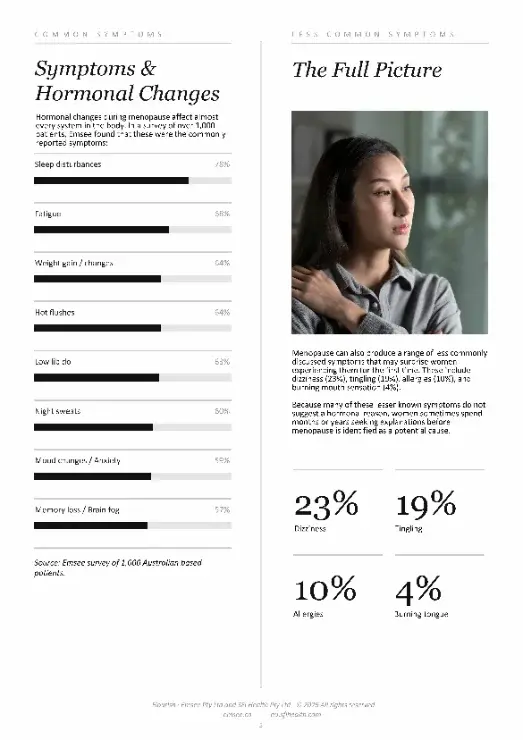
The common and the lesser-known, from sleep and mood to brain fog and joint pain.
03
Perimenopause
How to recognise the first stage, and when it is worth speaking to a health professional.
04
Getting a diagnosis
A health checklist and a symptom checker to take to your Doctor.
05
Managing it
Hormone therapy, natural approaches and lifestyle changes, set out side by side.
06
Mood, sleep and brain health
Including a feature on sleep with Dr Anup Desai.
07
Nutrition
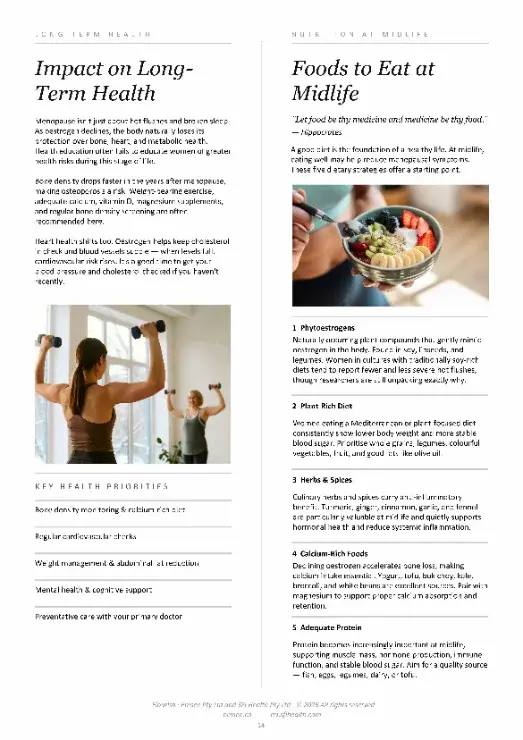
Food choices that suit this stage of life, with a phytoestrogen food guide.
08
Long-term health
What lower hormone levels can mean for your bones, heart and metabolism.
09
Fact or fiction
Common myths about menopause, set straight.
A look inside
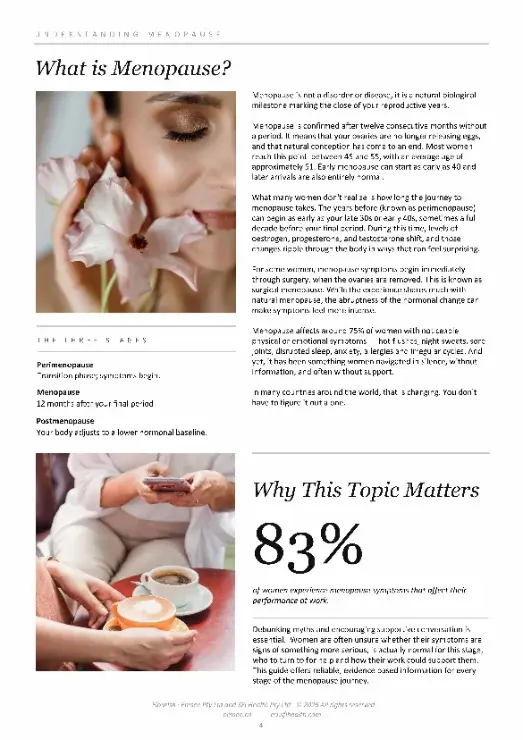
Clear pages you can read at your own pace.
Who it is for
For anyone who wants clear, trustworthy answers.
- You are noticing changes and want to understand what is going on.
- You are comparing your options before you see a Doctor.
- You are supporting a partner, friend or colleague.
- You want reliable information in one place.
Your next step
When you are ready to talk it through, a Doctor is a short conversation away.
Your first appointment is a bulk billed menopause assessment, if eligible, by telehealth. No referral is needed.
Medical disclaimer. The Flourish guide and this page are general information, not medical advice. The information on this page is general in nature and is not a diagnosis or a recommendation for your circumstances. It does not replace advice from a qualified health practitioner. If you need urgent care, contact your GP or the nearest emergency department, or call 000.