


The estrobolome is the collection of gut bacteria responsible for regulating oestrogen recycling in your body. A disrupted gut microbiome can alter oestrogen levels, worsening menopause symptoms. Supporting your gut health through diet, lifestyle, and appropriate clinical care may help restore hormonal balance.
If you've ever wondered why your menopause symptoms feel so unpredictable — the hot flushes, mood swings, bloating, and weight gain that seem to have a mind of their own — the answer may lie deeper than your ovaries. Emerging research points to the gut as a powerful player in hormonal health. At the centre of this story is the estrobolome: the part of your gut microbiome that metabolises and recycles oestrogen.
This article explores what the estrobolome is, how it affects oestrogen levels, and practical steps to support it during your menopause journey. For a full overview of the range of menopause symptoms linked to hormonal changes, explore our dedicated resource.
Table of Contents
- What Is the Estrobolome?
- How the Estrobolome Works
- The Menopause Connection
- When the Estrobolome Is Disrupted
- Supporting Your Estrobolome
- The Role of Clinical Care
- Frequently Asked Questions
- Conclusion
What Is the Estrobolome?
The estrobolome is a specific subset of your gut microbiome — the vast community of bacteria and other microorganisms that live in your digestive tract. More precisely, it refers to the collection of bacterial genes that produce enzymes capable of metabolising oestrogen [1].
After oestrogen travels through the body — supporting bone density, mood, and the menstrual cycle — it is processed in the liver into inactive forms ready for elimination. A portion then travels in bile into the small intestine, where gut bacteria take over. The estrobolome determines how much of that oestrogen gets recycled back into circulation and how much is eliminated for good.
Key term: Dysbiosis refers to an imbalance in the gut microbiome, where beneficial bacterial species are reduced and less healthy populations take over. This can have downstream effects on oestrogen regulation.
How the Estrobolome Works — Following the Oestrogen Trail
The primary mechanism involves an enzyme called beta-glucuronidase (often abbreviated as GUS), produced by a wide range of gut bacteria — researchers have identified it in more than 60 bacterial genera [1].
Here is how the cycle works:
- Liver processing: Oestrogen is conjugated (chemically modified) in the liver into an inactive form, making it water-soluble and ready for excretion.
- Bile excretion: The conjugated oestrogen travels via bile into the intestine.
- Bacterial deconjugation: Beta-glucuronidase produced by estrobolome bacteria cleaves off the conjugated tag, converting oestrogen back to its active, free form.
- Reabsorption: This reactivated oestrogen is absorbed through the intestinal wall and re-enters the bloodstream — a process called enterohepatic circulation.
- Systemic action: The recycled oestrogen can now bind to oestrogen receptors throughout the body.
This cycle is not inherently harmful. A well-functioning estrobolome helps maintain hormonal balance. The challenge arises when the system is disrupted — either producing too much active oestrogen (oestrogen dominance) or too little (contributing to a more pronounced oestrogen deficiency) [2].
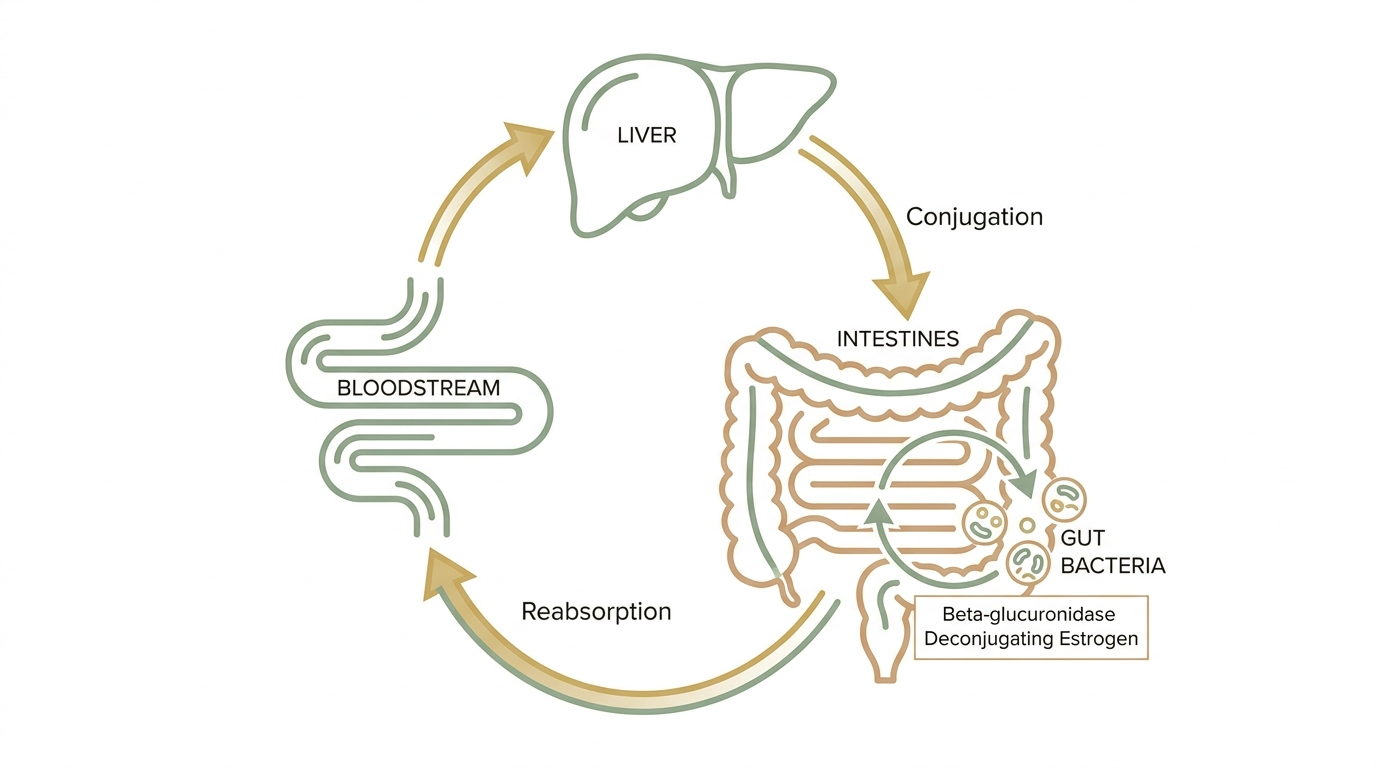
Sulfatase enzymes also play a role, though they are less studied. Together, these enzymes make the gut microbiome a meaningful regulator of how much active oestrogen circulates in your body at any given time [1][4].
The Menopause Connection — Why the Estrobolome Matters More After 40
The estrobolome's influence is not equal across all life stages. Before menopause, oestrogen fluctuates significantly throughout the monthly cycle, and these strong hormonal signals somewhat overshadow the estrobolome's contribution. After menopause, however, when ovarian oestrogen production has ceased and circulating levels stabilise at much lower values, the estrobolome's influence becomes proportionally more significant [1].
Research has found that in postmenopausal women, gut microbiome diversity correlates more strongly with circulating oestrogen levels than it does in premenopausal women. This suggests that as endogenous oestrogen production declines, microbial modulation of residual oestrogen becomes a more important regulatory factor [1].
Menopause itself also changes the gut. A large study found that menopause is associated with meaningful shifts in gut microbiome composition and estrobolome activity, with implications for cardiometabolic health [3]. Research also indicates the postmenopausal microbiome becomes more similar in composition to a male microbiome, reflecting the loss of female sex hormones' influence on microbial diversity [2].
For perimenopausal and menopausal women, the gut and hormonal system are in mutual flux. Supporting gut health during this transition may help soften the hormonal disruption behind so many menopause symptoms.
Unsure what's driving your symptoms? A menopause-focused practitioner can help piece together the hormonal, lifestyle, and gut factors influencing your symptoms and build a personalised plan. Book a bulk-billed consultation — no referral needed.
When the Estrobolome Is Disrupted — Causes and Consequences
Several factors can disturb the estrobolome, and many of them are common in midlife:
Factors that reduce microbial diversity:
- Antibiotic use (which can broadly reduce gut bacteria populations)
- A low-fibre, highly processed diet
- Chronic stress and poor sleep
- Alcohol consumption
- Certain long-term medications
What happens when the estrobolome is underactive: When beta-glucuronidase activity is reduced — due to lower microbial diversity or dysbiosis — less oestrogen is deconjugated and reabsorbed. The result is lower circulating oestrogen. For women in perimenopause or menopause, who are already experiencing declining oestrogen, this can amplify symptoms linked to oestrogen deficiency [2].
What happens when the estrobolome is overactive: An overactive estrobolome can lead to excessive oestrogen reabsorption, contributing to relative oestrogen dominance. This has been proposed as a mechanism in conditions such as endometriosis and, in some research contexts, as a potential contributor to breast cancer risk — though the evidence here remains observational and heterogeneous [1].
Research also notes associations between estrobolome disruption and polycystic ovarian syndrome (PCOS), metabolic syndrome, and digestive problems, though establishing causation in human studies remains challenging [2].
Supporting Your Estrobolome — Practical Steps
The gut microbiome is responsive to lifestyle changes. While research into targeted estrobolome interventions is still evolving, the following approaches are supported by broader gut health evidence and some emerging data on oestrogen regulation.

Eat More Fibre
High-fibre diets are associated with lower circulating oestrogen, likely through reduced beta-glucuronidase activity and improved elimination [2]. Include:
- Cruciferous vegetables (broccoli, cauliflower, kale)
- Legumes, lentils, and chickpeas
- Whole grains such as oats and barley
- Fruits with edible skins
Prioritise Fermented Foods
Fermented foods introduce beneficial bacterial species to the gut. Yoghurt with live cultures, kefir, kimchi, sauerkraut, and miso are worth including regularly. Dietary variety matters — aim for a broad range of foods overall.
Consider Probiotics and Prebiotics
A randomised controlled trial found that probiotic supplementation with beta-glucuronidase activity helped regulate serum oestrogen levels in postmenopausal women compared to placebo [2]. Probiotics containing Lactobacillus and Bifidobacterium species are generally well-tolerated, while prebiotics found in garlic, onions, leeks, and bananas support their growth. Speak with a naturopath before starting any supplement.
Move Your Body and Manage Stress
Regular, moderate-intensity exercise supports gut microbiome diversity and liver detoxification. Supporting weight management during menopause through movement also reduces oestrogen produced from adipose tissue. Equally, chronic stress and poor sleep alter gut microbiome composition, so prioritising sleep hygiene and stress reduction practices — mindfulness, yoga, or time in nature — benefits gut health downstream.
Tip: Avoid unnecessary antibiotic use and limit ultra-processed foods. Both significantly reduce gut bacterial diversity, which can impair estrobolome function over time.
The Role of Clinical Care — Integrating Gut Health with Hormone Therapy
Gut health strategies are complementary to — not a replacement for — appropriate medical treatment. For women with significant symptoms, hormone therapy options your doctor may discuss include body-identical hormone therapy: hormones with the same molecular structure as those your body produces, prescribed based on individual health history and risk factors.
The Australian Menopause Centre takes an individualised approach to personalised menopause treatment, combining body-identical hormone therapy with holistic support from naturopaths and nutritionists. Supporting the estrobolome through diet and lifestyle is one element within that comprehensive picture. If lifestyle changes alone are not providing sufficient relief, speaking with a menopause-focused practitioner is a worthwhile next step.
This information is for educational purposes only and is not medical advice. Consult your healthcare provider for personalised recommendations. Treatment decisions should be individualised based on your medical history and circumstances.
Frequently Asked Questions
What exactly is the estrobolome?
The estrobolome is the collection of gut bacterial genes that produce enzymes — primarily beta-glucuronidase — capable of metabolising oestrogen. This enzyme converts inactive conjugated oestrogen back into its active form inside the intestine, allowing it to be reabsorbed into the bloodstream.
Can an unhealthy gut cause low oestrogen?
Research suggests it can contribute. When gut microbial diversity is reduced through dysbiosis, beta-glucuronidase activity declines, meaning less oestrogen is deconjugated and reabsorbed. For perimenopausal and postmenopausal women already experiencing declining ovarian oestrogen, this may worsen symptoms [2].
Does menopause change your gut microbiome?
Yes. The gut microbiome shifts meaningfully around menopause, partly due to declining oestrogen and progesterone. The postmenopausal microbiome shows reduced diversity and estrobolome activity [3]. This bidirectional relationship — where hormones influence gut bacteria and gut bacteria influence hormones — makes gut health especially relevant during this life stage.
What foods are best for the estrobolome?
A diverse, high-fibre diet is the most evidence-supported approach. This includes vegetables, legumes, wholegrains, and fruit. Fermented foods such as yoghurt, kefir, and kimchi can also support a healthy gut microbiome. Limiting ultra-processed foods and alcohol helps preserve microbial diversity.
Should I take a probiotic for menopause?
Some research suggests certain probiotic strains may help modulate oestrogen levels in postmenopausal women, though evidence is still emerging [2]. Strain selection and dosage matter, so speak with a naturopath before starting. Probiotics work best alongside dietary and lifestyle changes, not as a standalone solution.
Conclusion
The estrobolome is a compelling example of how interconnected our body systems are. Your gut actively shapes how much oestrogen circulates at any given time, and during perimenopause and menopause — when ovarian oestrogen production declines — this gut-hormone relationship becomes even more significant.
Fibre-rich nutrition, fermented foods, regular movement, and stress management are practical starting points that may help soften the hormonal shifts of menopause. These work best when they complement appropriate medical care tailored to your individual needs.
If you are navigating menopause and want personalised support from a multidisciplinary team, the Australian Menopause Centre offers telehealth consultations with menopause-focused doctors, naturopaths, and nutritionists — with no referral required.
Hormone therapy is not suitable for everyone. Your doctor will assess whether it's appropriate for you based on your individual health history, symptoms, and risk factors. Individual results may vary.
References
- Larnder, A. H., Manges, A. R., & Murphy, R. A. (2025). The estrobolome: Estrogen-metabolizing pathways of the gut microbiome and their relation to breast cancer. International Journal of Cancer, 157(4), 599–613. https://doi.org/10.1002/ijc.35427
- Wang, H., Shi, F., Zheng, L., Zhou, W., Mi, B., Wu, S., & Feng, X. (2025). Gut microbiota has the potential to improve health of menopausal women by regulating estrogen. Frontiers in Endocrinology, 16, 1562332. https://doi.org/10.3389/fendo.2025.1562332
- Peters, B. A., Lin, J., Qi, Q., Usyk, M., Isasi, C. R., Mossavar-Rahmani, Y., Derby, C. A., Santoro, N., Perreira, K. M., Daviglus, M. L., Kominiarek, M. A., Cai, J., Knight, R., Burk, R. D., & Kaplan, R. C. (2022). Menopause is associated with an altered gut microbiome and estrobolome, with implications for adverse cardiometabolic risk in the Hispanic Community Health Study/Study of Latinos. mSystems, 7(3), e00273-22. https://doi.org/10.1128/msystems.00273-22
- Baker, J. M., Al-Nakkash, L., & Herbst-Kralovetz, M. M. (2017). Estrogen–gut microbiome axis: Physiological and clinical implications. Maturitas, 103, 45–53. https://doi.org/10.1016/j.maturitas.2017.06.025
