


Premature menopause — menopause before age 40 — affects roughly 1% of women and carries serious long-term health implications for bone, heart, and mental health. Early diagnosis, hormone therapy, and holistic support can significantly reduce these risks. If you're experiencing symptoms before your expected time, specialist care is available.
Receiving a premature menopause diagnosis in your 30s — or even your 20s — can feel completely disorienting. Whether your menopause has been triggered by surgery, cancer treatment, an autoimmune condition, or has arrived without a clear explanation, you deserve accurate information and a clear path forward.
This article explains what premature menopause is, what causes it, the emotional weight it can carry, and what comes next. With the right support, this transition is one you can navigate well.
Table of Contents
- Understanding Premature Menopause
- What Causes Premature Menopause?
- The Emotional Impact
- Long-Term Health Risks
- Treatment and Management Options
- Lifestyle Strategies That Support Your Health
- Frequently Asked Questions
- Conclusion
Understanding Premature Menopause
Menopause is confirmed after 12 consecutive months without a period. When this happens before the age of 40, it is called premature menopause. When it occurs between 40 and 45, it is referred to as early menopause. Both represent a significant departure from the typical menopausal timeline, which in Australia generally falls between the ages of 45 and 55.
You may also hear the term premature ovarian insufficiency (POI), which is closely related. With POI, the ovaries are functioning poorly but occasional ovulation may still occur, meaning some women with POI can still conceive naturally. True premature menopause means ovarian function has permanently ceased. In practice, the terms are often used interchangeably, and clinical management is closely aligned.
How common is it?
Premature menopause (before age 40) affects approximately 1% of women, while early menopause (before 45) occurs in around 5% [1]. In rare cases, menopause can occur before age 30, affecting roughly 0.1% of the female population. Despite relatively low numbers, the health consequences are far-reaching.
Recognising the signs
The signs and symptoms of menopause in premature menopause are largely the same as those that occur at typical ages. These may include irregular periods, hot flushes, night sweats, sleep disorders, vaginal dryness, mood swings, anxiety, and low libido. What differs is the timing — and the significance that timing carries for long-term health.
What Causes Premature Menopause?
There are several known causes, though in up to 50% of cases, no specific cause can be identified [1].
Medical and surgical causes
Surgical menopause occurs when both ovaries are removed (bilateral oophorectomy), either as a standalone procedure or as part of cancer treatment. This brings on menopause immediately and abruptly.
Cancer treatments — particularly chemotherapy and pelvic radiation — can damage the ovaries, sometimes permanently.
Autoimmune conditions such as thyroid disease, rheumatoid arthritis, and Addison's disease may trigger immune-mediated damage to ovarian tissue.
Genetic and chromosomal factors
Chromosomal abnormalities, including Turner syndrome and Fragile X syndrome, are associated with POI. A family history of early menopause also significantly raises a woman's risk, making genetic factors an important area of investigation [2].
Lifestyle factors
Smoking is the only modifiable lifestyle factor consistently linked to earlier menopause onset, with some research suggesting it can bring menopause forward by up to two years.
The Emotional Impact
The psychological toll of a premature menopause diagnosis is often underestimated in healthcare settings, yet research clearly demonstrates the extent of this burden.
A 2024 systematic review and meta-analysis of 15 studies found that women with POI had nearly four times the odds of experiencing anxiety (OR = 3.74) and 60% higher odds of depression compared to women with preserved ovarian function [3]. Poor quality of life was also significantly elevated (OR = 2.55) [3].
Grief, identity, and fertility loss
For women who had hoped to conceive, the loss of natural fertility can be devastating. Grief for the future imagined, for bodily autonomy, and for an identity tied to reproductive life is a completely valid response — and one that deserves acknowledgement, not minimisation. Even for women who had not planned further pregnancies, premature menopause can bring a confronting sense of ageing early and disconnection from peers.
Social isolation and support gaps
Research indicates that women with POI often report lower perceived social support and greater social isolation [2]. The condition is uncommon enough that many women feel alone in their experience. Peer support groups — in person and online — can play a meaningful role in reducing this isolation.
Important: Hormone therapy addresses physical symptoms but research suggests it is not a standalone treatment for mood disorders associated with premature menopause [3]. A comprehensive care approach that includes psychological support is recommended.
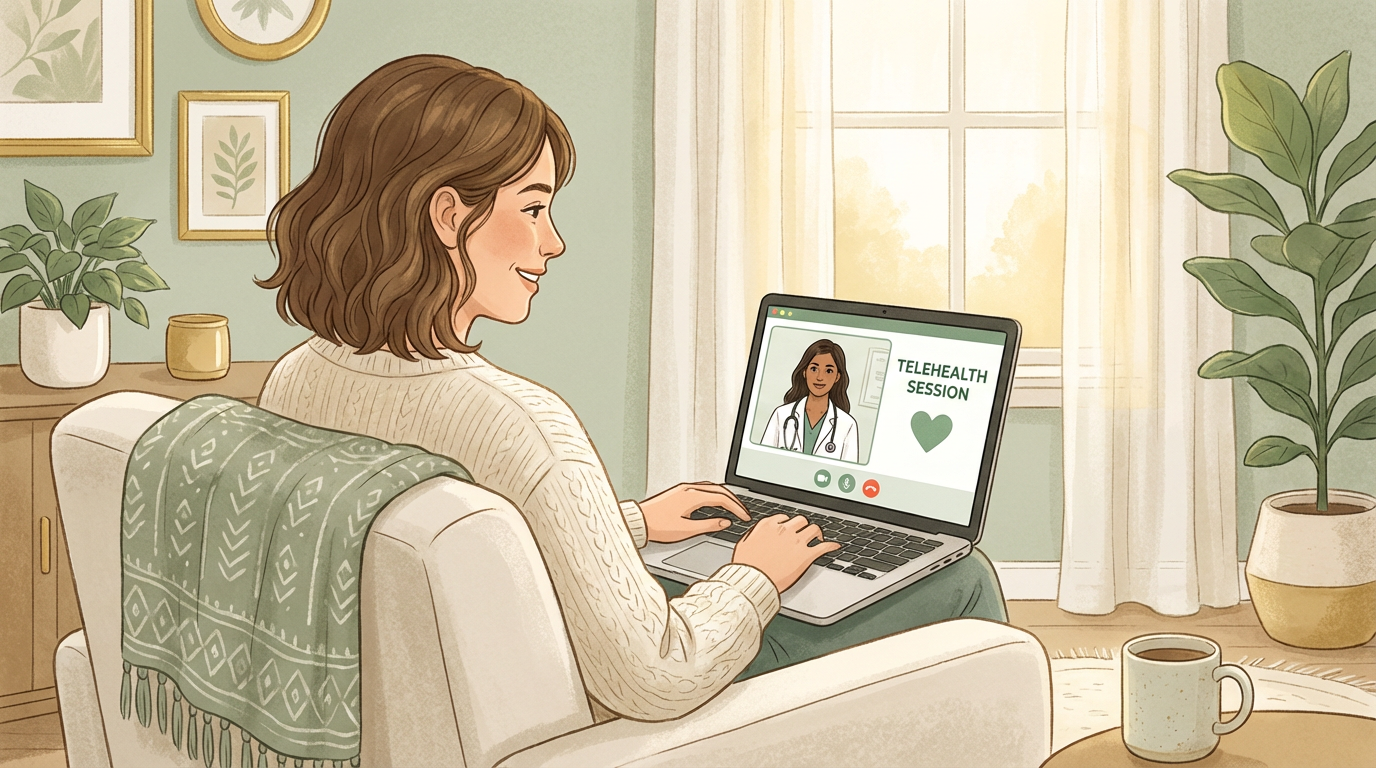
Just been diagnosed, or suspect premature menopause? A menopause-focused doctor can help with diagnosis, hormone therapy, and broader care — all via telehealth, no referral needed. Book a bulk-billed consultation.
Long-Term Health Risks
Losing oestrogen at a young age means the body goes without key hormonal protection for far longer than with typical-age menopause — with significant implications across multiple body systems [1][2].
Bone health
Oestrogen plays a central role in maintaining bone density. Women with premature menopause are exposed to a prolonged period of oestrogen deficiency that dramatically increases the risk of osteoporosis and fractures. Research indicates that women with POI have a 1.5-fold greater risk of fracture compared to those who reach menopause at the typical age [4]. Bone density assessment and proactive management are essential from the time of diagnosis.
Cardiovascular health
Oestrogen has cardioprotective properties that help regulate cholesterol, reduce inflammation, and support blood vessel health. Women who lose this protection early are at increased risk of cardiovascular disease, including heart attack and stroke, compared to those with typical-age menopause [2]. This makes cardiovascular risk monitoring an ongoing priority.
Cognitive health and memory
Oestrogen supports brain function, and its early loss has been associated with an increased risk of cognitive decline and, in some research, dementia. While evidence is still evolving, this is one reason why early hormonal intervention may offer neurological, as well as physical, benefit.
Treatment and Management Options
The cornerstone of management for premature menopause is hormone therapy — and the evidence supports its use clearly in this population [1][2].

Menopausal hormone therapy (MHT)
For women with premature menopause who have no contraindications, guidelines recommend menopausal hormone therapy (MHT) — ideally continued until at least the average age of natural menopause (around 51 years) [2]. This is not the same as the risk profile associated with MHT in older postmenopausal women. In the context of premature menopause, MHT is essentially replacing hormones the body would still be producing.
The menopause treatment program at the Australian Menopause Centre is built around body-identical hormone therapy — using hormones with the same molecular structure as those the body naturally produces. Treatment approaches your doctor may discuss include:
- Transdermal oestrogen (preferred over oral due to a more favourable blood clot risk profile)
- Micronised progesterone (preferred over synthetic progestogens for endometrial protection)
- Testosterone therapy where clinically appropriate
All treatment uses products listed in the ARTG (e.g. Prometrium; ARTG 232818/232823), and is individualised and developed through shared decision-making between you and your doctor.
Treatment information: Hormone therapy is not suitable for everyone. Your doctor will assess whether it is appropriate for you based on your individual health history, symptoms, and risk factors. Individual results may vary.
Mental health support
Mental health support should be an integral part of care, not an optional add-on. Cognitive behavioural therapy (CBT), mindfulness-based approaches, and peer support have all shown benefit in addressing the mood and anxiety symptoms that frequently accompany this diagnosis.
Fertility considerations
If preserving fertility is important to you, discussing options such as egg freezing, donor egg IVF, and surrogacy with a reproductive specialist is an important early step. Some women with POI retain occasional ovulation, meaning spontaneous pregnancy is not impossible — though it is uncommon.
Lifestyle Strategies That Support Your Health
Alongside medical management, lifestyle choices can meaningfully support long-term health outcomes.
- Weight-bearing exercise and strength training support bone density and cardiovascular health, and may help mood and energy.
- Calcium and vitamin D are essential for bone health — prioritise food sources first, then supplement if needed.
- A nutrient-rich diet featuring vegetables, wholegrains, legumes, and oily fish supports cardiovascular and hormonal health.
- Limiting alcohol and quitting smoking reduces fracture and cardiovascular risk.
- Stress management through yoga, meditation, or time outdoors supports sleep and emotional resilience.
- Sleep hygiene deserves attention, as night sweats and anxiety frequently disrupt rest.
If weight management has become a challenge, the Australian Menopause Centre's weight loss program is designed to support women through the hormonal changes that affect metabolism.
Frequently Asked Questions
Can I still get pregnant after a premature menopause diagnosis?
Natural conception is unlikely once premature menopause is confirmed. However, assisted reproductive techniques such as donor egg IVF remain an option. Women with POI (rather than confirmed premature menopause) may still ovulate occasionally, so spontaneous pregnancy is possible but uncommon. A reproductive specialist can discuss the full range of options.
Does premature menopause mean I will age faster?
Premature menopause accelerates certain health risks associated with oestrogen loss, but these can be significantly reduced with appropriate treatment and lifestyle support. Women who receive timely, evidence-informed management can and do live long, healthy lives.
Is premature menopause hereditary?
Genetics do play a role. A family history of early or premature menopause increases your own risk. Genetic testing is available in some cases and can be discussed with your specialist.
How is premature menopause diagnosed?
Diagnosis typically involves measuring follicle-stimulating hormone (FSH) and oestrogen levels through a blood test, usually repeated to confirm. A high FSH combined with absent or irregular periods in a woman under 40 supports the diagnosis, along with a detailed clinical history.
Why is hormone therapy recommended at a young age?
MHT in premature menopause is replacing hormones your body would naturally still be producing. Evidence-based guidelines recommend continuing until at least the average age of natural menopause to protect your bones, heart, and brain. The risk profile differs from MHT use in older postmenopausal women — your doctor will assess what is right for you individually.
Conclusion
A premature menopause diagnosis is significant — but it is not the end of your story. With accurate information, early intervention, and personalised care, you can protect your long-term health and move forward with confidence.
The Australian Menopause Centre has more than 20 years of experience supporting women through every stage of the menopause journey, including those who arrive earlier than expected. Our telehealth model means specialist support is available wherever you are in Australia — no referral, no lock-in contract, no unnecessary barriers.
If you think you may be experiencing premature menopause, a consultation with a menopause-focused doctor is the right first step.
This information is for educational purposes only and is not medical advice. Consult your healthcare provider for personalised recommendations. Treatment decisions should be individualised based on your medical history and circumstances.
References
- Hamoda, H., & Sharma, A. (2024). Premature ovarian insufficiency, early menopause, and induced menopause. Best Practice & Research Clinical Endocrinology & Metabolism, 38(1), 101823. https://doi.org/10.1016/j.beem.2023.101823
- Panay, N., Anderson, R. A., Nappi, R. E., Vincent, A. J., Vujovic, S., Webber, L., & Wolfman, W. (2020). Premature ovarian insufficiency: an International Menopause Society White Paper. Climacteric, 23(5), 426–446. https://doi.org/10.1080/13697137.2020.1804547
- Tian, Y., Zhang, X., Xin, Z., Li, C.-S. R., Zhang, F., Deng, H., & Yang, X. (2024). Premature ovarian insufficiency is associated with increased risk of depression, anxiety, and poor life quality: A systematic review and meta-analysis. Alpha Psychiatry, 25(2), 132–141. https://doi.org/10.5152/alphapsychiatry.2024.231501
