
.png)
.png?width=1376&height=768&name=1a5ee79b-a5c1-4c2d-9d35-2f242bc25f8d%20(1).png)
HRT patches (also called MHT patches) deliver oestrogen — and sometimes progestogen — directly through your skin, bypassing the digestive system. Research shows transdermal delivery may carry a lower risk of blood clots compared to oral tablets. Patches are one option your doctor may discuss based on your individual circumstances — gels and tablets may be equally appropriate. Choosing the right type and dose is always personalised to your health history and symptoms.
If you're in perimenopause or menopause and wondering whether hormone therapy patches might work for you, you're not alone. HRT patches — increasingly called menopausal hormone therapy (MHT) patches — offer a practical way to deliver hormones steadily through the skin. Whether you're dealing with hot flushes, sleep disorders, or thinking about long-term bone health, understanding your options is a useful first step. This guide covers the types available, the benefits, what to expect, and how to access specialist care in Australia.
Table of Contents
- What Are HRT Patches?
- Types of HRT Patches
- Application and Routine
- What to Expect
- Key Benefits
- Are They Right for You?
- Getting Support in Australia
- FAQs
- Conclusion
What Are HRT Patches?
HRT patches are small, adhesive patches worn on the skin that release hormones directly into your bloodstream through the skin — bypassing the liver and digestive system entirely. This is called transdermal delivery.
The main hormone delivered is oestrogen (specifically oestradiol, the body-identical form that mirrors what your ovaries naturally produce). When a woman still has her uterus, a progestogen must be added alongside oestrogen to protect the uterine lining — either as a separate oral micronised progesterone or as part of a combined patch.
In Australia, MHT is the preferred clinical term for what many still call HRT. Research indicates MHT is the most effective treatment for vasomotor symptoms such as hot flushes and night sweats, and is most beneficial when started before age 60 or within 10 years of menopause onset.
Patch suitability is always individually assessed. Patches are one of several MHT delivery options — gels and tablets may be equally appropriate depending on your symptoms, preferences, and health history. Your doctor will work with you to find the right fit.
Types of HRT Patches
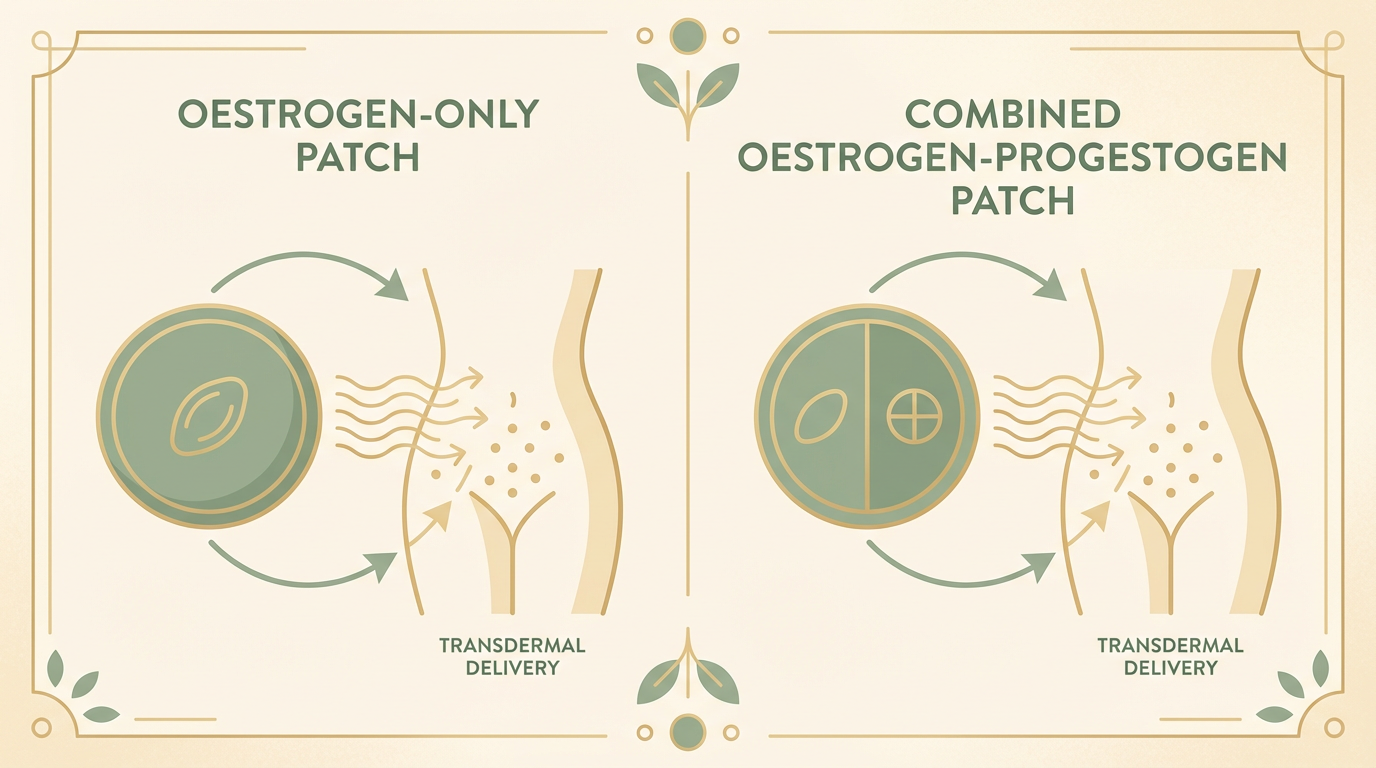
There are two main categories of HRT patches available, and the right choice depends on whether you still have your uterus.
Oestrogen-Only Patches
These patches deliver oestrogen through the skin and are suitable for women who have had a hysterectomy. If you still have a uterus, taking oestrogen alone can increase the risk of endometrial (womb lining) cancer — so you'll need a separate progestogen taken alongside.
Combined (Oestrogen + Progestogen) Patches
Combined patches contain both hormones in a single patch and are designed for women who have an intact uterus. They release both oestrogen and progestogen gradually, providing symptom relief while protecting the uterine lining. Some women prefer this as a simpler option. Others may do better using two separate preparations, which allows for more precise dose adjustments.
Your doctor will guide you on which format suits your situation. The goal is always the lowest effective dose, with duration reviewed regularly based on your individual needs and response.
How to Use HRT Patches: Application and Routine
Using HRT patches correctly ensures consistent absorption and skin comfort.
- Where to apply: Clean, dry skin on your lower abdomen, buttock, or upper thigh. Avoid the breasts and waistline.
- Skin prep: Avoid moisturisers, oils, or lotions on the area beforehand. Let skin cool after a shower before applying.
- Rotation: Alternate sites each change, leaving at least a week before reusing the same spot.
- Frequency: Change twice a week on two consistent days. A phone reminder can help.
- If a patch falls off: Reapply immediately, or use a new patch and continue your regular schedule.
Patches are designed to stay on through showering, swimming, and exercise, though heat and sweat can sometimes reduce adhesion.
What to Expect When You Start
Starting MHT is rarely an immediate fix — your body needs time to adjust.
The First Few Months
You may notice early side effects such as breast tenderness, hormonal headaches, or mild nausea. These often settle within one to three months. Symptom improvement for hot flushes and sleep may begin within a few weeks, but full benefit typically takes up to three months.
Adjusting Your Treatment
If side effects persist beyond three months, or symptoms remain poorly managed, your doctor may adjust the dose or switch formulation. Treatment is genuinely individualised — what works for one person may not suit another. The Australian Menopause Centre's menopause treatment program pairs each woman with a dedicated care team to personalise and refine treatment over time.
Skin Reactions
Mild redness or itching at the patch site is relatively common. Rotating sites usually helps. If a persistent rash develops, a different patch formulation or an alternative delivery method such as a gel may be worth exploring with your doctor.
Key Benefits of HRT Patches
Lower Risk of Blood Clots Compared to Oral Tablets
One of the clearest advantages of transdermal HRT is the reduced risk of venous thromboembolism (VTE). A systematic review of 51 studies found VTE risk to be the strongest clinical difference between transdermal and oral routes, supporting transdermal HRT as safer [1]. A meta-analysis confirmed that oral oestrogen increases VTE risk while transdermal oestradiol does not — particularly when paired with micronised progesterone [2].
This makes patches a commonly preferred option for women with risk factors such as higher BMI, a history of clotting conditions, or those wanting to minimise this risk [3].
Relief from Menopause Symptoms
HRT patches can help manage the range of symptoms that come with falling oestrogen levels. Many women find that mood swings, fatigue, vaginal dryness, anxiety, and joint pain may improve with appropriate hormone therapy. Vasomotor symptoms — hot flushes and night sweats — are among the most reliably treated.
Bone and Long-Term Health Support
Declining oestrogen accelerates bone loss after menopause, increasing the risk of osteoporosis and fractures. Hormone therapy has been shown to help maintain bone density and reduce fracture risk. Some evidence also suggests that MHT started early in the menopause transition may have cardiovascular benefits — though this varies depending on individual age, health status, and timing.
Convenience and Consistency
Patches are changed just twice a week and deliver hormones at a steady, consistent rate — avoiding the peaks and troughs that can come with daily oral doses. This suits women who prefer not to take a daily pill, and steady delivery may also reduce side effects linked to hormonal fluctuations.
Tip: Some women find patches less suitable in warmer climates due to adhesion challenges. Speak to your doctor about gel-based alternatives or practical strategies like applying to cooler skin areas.
Are HRT Patches Right for You?

HRT patches won't suit everyone. Your doctor will assess your personal and family medical history, current symptoms, and any existing conditions. Hormone therapy is generally not recommended for women with a history of certain hormone-sensitive cancers, unexplained vaginal bleeding, or active liver disease.
The right delivery method — patch, gel, tablet, or another form — depends on your preferences, lifestyle, and how your body responds. For many women, particularly those with VTE risk factors, transdermal oestrogen is the clinically preferred route. If access to a GP is difficult, specialist telehealth services can help.
This information is for educational purposes only and is not medical advice. Consult your healthcare provider for personalised recommendations. Treatment decisions should be individualised based on your medical history and circumstances.
Getting Support in Australia
For many Australian women, navigating menopause care can feel complicated — particularly in regional areas or when GP appointments are limited. Telehealth has changed this significantly, making menopause-focused medical care more accessible from anywhere in the country.
A thorough specialist assessment helps you weigh the full picture: your symptoms, health history, and the range of MHT options (patches, gels, tablets, vaginal preparations), alongside lifestyle factors — nutrition, weight management, sleep, stress, and exercise. The Australian Menopause Centre offers telehealth consultations with a multidisciplinary team of doctors, naturopaths, and nutritionists. No referral is needed, and bulk-billed consultations are available.
Hormone therapy is not suitable for everyone. Your doctor will assess whether it's appropriate for you based on your individual health history, symptoms, and risk factors. Individual results may vary.
Frequently Asked Questions
How often do HRT patches need to be changed?
Most HRT patches are changed twice a week on two set days (for example, Monday and Thursday). This maintains consistent hormone levels. Many women find setting a phone reminder helpful.
How long before HRT patches start working?
Many women notice initial improvements in hot flushes and sleep within the first few weeks. Full benefit — including mood and energy changes — typically takes up to three months. If symptoms remain poorly managed after this, a dosage review with your doctor is appropriate.
Do HRT patches increase the risk of breast cancer?
The relationship between hormone therapy and breast cancer risk is nuanced, depending on the hormones used, duration of treatment, and individual risk factors. A menopause-specialist doctor can assess your personal risk profile and explain the current evidence.
Are HRT patches available in Australia without a referral?
HRT patches require a prescription in Australia. However, no GP referral is needed to see a telehealth menopause specialist — they can assess you and prescribe appropriate treatment following a consultation.
What is the difference between HRT and MHT?
They refer to the same treatment. MHT (menopausal hormone therapy) is the updated and preferred Australian term, as it more accurately describes the therapy. HRT is still widely understood and used.
Conclusion
HRT patches offer a convenient, evidence-based option for managing menopause symptoms — with research consistently supporting a lower VTE risk compared to oral tablets. They deliver steady hormone levels through the skin and come in oestrogen-only or combined formulations to suit different needs.
Every woman's menopause journey is different. The most important step is getting personalised guidance from a doctor with menopause expertise — someone who can weigh your health history, symptoms, and preferences together. A telehealth consultation with a menopause-focused doctor is an accessible and practical starting point.
References
- Šprem Goldštajn, M., Mikuš, M., Ferrari, F. A., Bosco, M., Uccella, S., Noventa, M., Török, P., Terzic, S., Laganà, A. S., & Garzon, S. (2023). Effects of transdermal versus oral hormone replacement therapy in postmenopause: a systematic review. Archives of Gynecology and Obstetrics, 307(6), 1727–1745. https://doi.org/10.1007/s00404-022-06647-5
- Scarabin, P.-Y. (2018). Progestogens and venous thromboembolism in menopausal women: an updated oral versus transdermal estrogen meta-analysis. Climacteric, 21(4), 341–345. https://doi.org/10.1080/13697137.2018.1446931
- Sobel, T. H., & Shen, W. (2022). Transdermal estrogen therapy in menopausal women at increased risk for thrombotic events: a scoping review. Menopause, 29(4), 483–490. https://doi.org/10.1097/GME.0000000000001938
