
.png)
.png?width=1376&height=768&name=a9f02111-7b19-4763-9b72-cee18923be9b%20(1).png)
A menopause diet plan built around whole foods, lean protein, calcium-rich choices, and anti-inflammatory fats can help ease symptoms like hot flushes, weight gain, and sleep disruption. This 7-day guide offers an evidence-informed framework for Australian women, with practical meal ideas and key nutrients to focus on.
Menopause is a natural transition — but the symptoms are real, and what you eat genuinely matters. Hot flushes, mood swings, disrupted sleep, and weight gain are among the most commonly reported experiences during perimenopause and beyond. A well-structured menopause diet plan doesn't need to be restrictive or complicated — it's about nourishing your body with the right nutrients at a time when its needs are shifting.
Most Australian women reach menopause around age 51, with perimenopause beginning several years earlier. Declining oestrogen affects metabolism, bone density, cardiovascular health, and more. Research consistently supports dietary strategies that help manage these changes. This guide provides a practical 7-day framework grounded in current evidence, using foods widely available across Australia.
Table of Contents
- Why Your Diet Changes at Menopause
- Key Nutrients for Menopause
- The 7-Day Menopause Diet Plan
- Foods to Embrace and Foods to Limit
- When Diet Isn't Enough
- Frequently Asked Questions
- Conclusion
Why Your Diet Changes at Menopause
Hormonal shifts during perimenopause and menopause measurably affect metabolism. Research suggests basal metabolic rate can decrease by up to 250–300 calories per day as oestrogen levels decline [1]. This means the same eating habits that maintained your weight at 40 may lead to gradual changes at 50 — not because of poor choices, but because your body's requirements have changed.
Declining oestrogen also accelerates bone loss. Studies indicate up to 20% of bone density can be lost in the five to seven years after menopause, increasing risk of osteoporosis. At the same time, shifts in cholesterol and insulin sensitivity raise cardiovascular risk. A targeted menopause diet plan addresses all of these changes, not just weight.
Oestrogen also has natural anti-inflammatory properties. Its decline can increase systemic inflammation, which a diet rich in antioxidants, omega-3s, and fibre helps counteract. A 2024 systematic review found Mediterranean diet adherence was associated with meaningful reductions in weight, blood pressure, triglycerides, and LDL cholesterol in menopausal women [2].
Key Nutrients for Menopause
Research consistently highlights several nutrients as particularly important during and after menopause [1][3].
Protein
Protein preserves muscle mass, supports metabolism, and keeps you satisfied. Current evidence supports aiming for approximately 1.1–1.5 g per kilogram of body weight daily [3]. Good Australian sources include grilled salmon, eggs, plain yoghurt, lentils, chickpeas, tofu, and lean chicken.
Calcium and Vitamin D
Women over 50 need around 1,200 mg of calcium daily. Pair calcium-rich foods with vitamin D sources to optimise absorption. Excellent choices include plain yoghurt, canned sardines (with bones), kale, bok choy, and fortified plant milks. For vitamin D, oily fish, egg yolks, and sensible sun exposure all contribute.
Omega-3 Fatty Acids
Omega-3s support heart health, reduce inflammation, and may help manage mood. Aim for at least two serves of oily fish per week — salmon, mackerel, and sardines are affordable and widely available across Australia. Plant-based sources include walnuts, chia seeds, and flaxseeds.
Phytoestrogens and Fibre
Phytoestrogens are plant compounds that may gently ease vasomotor symptoms like hot flushes in some women [1]. They're found in soy foods (tofu, edamame, tempeh), chickpeas, and linseed. Responses vary — some women notice meaningful relief while others see little change. Fibre — aim for 25 g per day from whole grains, legumes, vegetables, and fruit — supports gut health, blood sugar stability, and heart health.
The 7-Day Menopause Diet Plan
This plan follows a Mediterranean-style, whole-food approach — the dietary pattern most strongly supported by current evidence for menopausal women [2][3]. Each day balances protein, fibre, healthy fats, and calcium-rich foods.
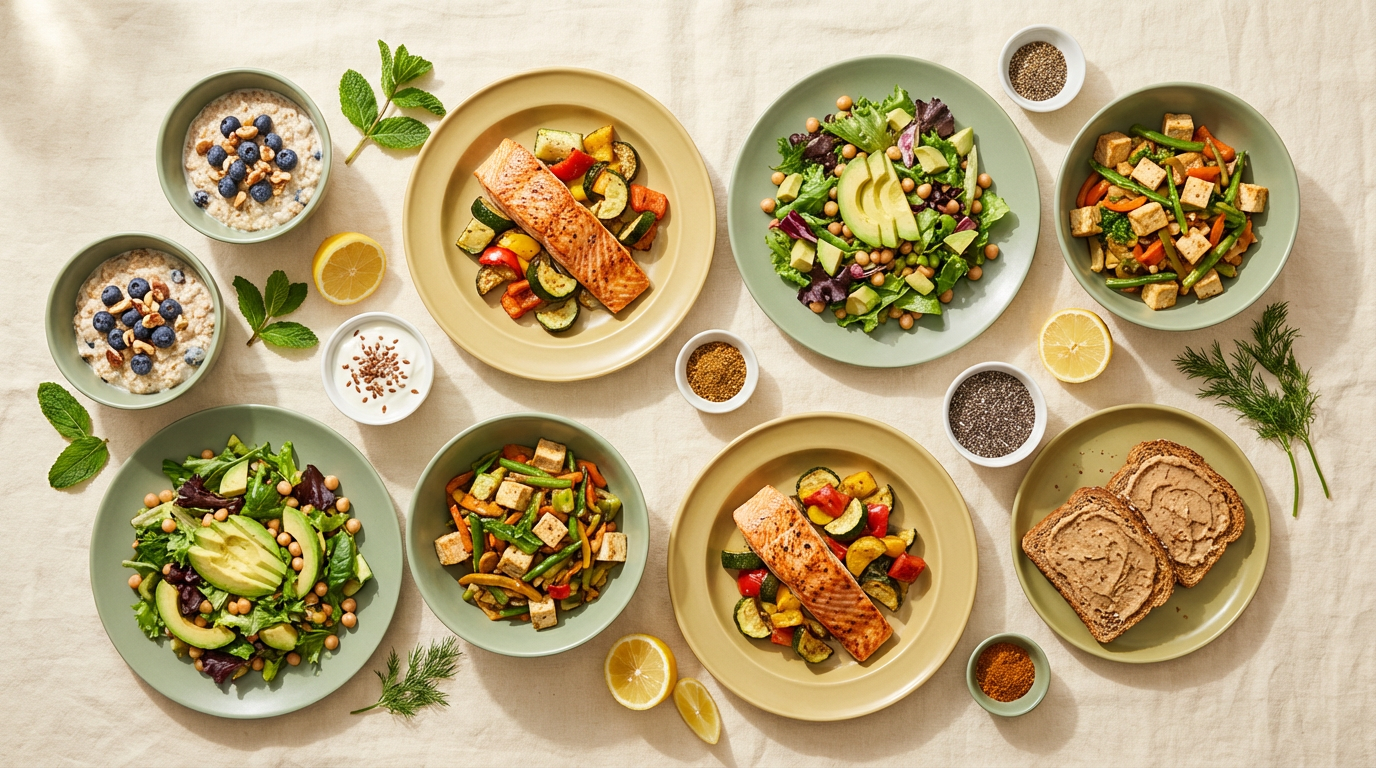
Day 1 – Foundation Day Porridge with chia seeds and blueberries | Chickpea and roasted vegetable salad | Baked salmon with broccoli and brown rice | Greek yoghurt with seeds
Day 2 – Plant Power Wholegrain toast with avocado and poached egg | Lentil soup with wholegrain roll | Tofu and vegetable stir-fry with brown rice noodles | Almonds and fruit
Day 3 – Bone Support Smoothie with fortified soy milk, spinach, banana, chia, and tahini | Sardine and salad wrap with hummus | Chicken and kale stir-fry with brown rice | Plain yoghurt with strawberries
Day 4 – Heart Health Overnight oats with flaxseeds and raspberries | Grilled salmon salad with olives and olive oil dressing | Baked barramundi with sweet potato and green beans | Carrot sticks with hummus
Day 5 – Phytoestrogen Focus Soy yoghurt with granola and ground flaxseed | Miso soup with tofu and edamame | Tempeh and chickpea curry with brown rice | Small soy latte, dark chocolate
Day 6 – Weekend Nourish Vegetable omelette with spinach, capsicum, and feta | Homemade minestrone with cannellini beans | Grilled lamb with tabbouleh and tzatziki | Mixed berries with ricotta
Day 7 – Rest and Reset Bircher muesli with grated apple and seeds | Warm quinoa bowl with roasted pumpkin and tahini drizzle | Lentil and vegetable dhal with cauliflower rice | Apple with almond butter
Tip: Prepare a large batch of whole grains at the start of each week. Having brown rice or quinoa ready means you can build balanced meals quickly on busy evenings.
Want a plan tailored to you? Our naturopaths and nutritionists can help you adapt these principles to your symptoms, stage, and lifestyle. Book a bulk-billed consultation — no referral needed.
Foods to Embrace and Foods to Limit
Fill Your Plate With:
- Oily fish: Salmon, sardines, mackerel (2–3 times per week)
- Vegetables: Aim for half your plate at each main meal
- Legumes: Chickpeas, lentils, kidney beans — fibre-rich and phytoestrogen sources
- Whole grains: Brown rice, oats, quinoa, wholegrain bread
- Dairy or fortified alternatives: Yoghurt, milk, or fortified plant milks
- Healthy fats: Extra virgin olive oil, avocado, nuts, seeds
- Soy foods: Tofu, tempeh, edamame — available in most Australian supermarkets
Reduce or Limit:
- Refined sugar and processed foods: Can worsen bloating and weight gain
- Alcohol: May trigger hot flushes and disrupt sleep
- Excessive caffeine: Some women find it worsens anxiety and hot flushes
- High-sodium foods: Linked to blood pressure increases and bone calcium loss
Tip: Try an 'add first' approach — focus on increasing vegetables, protein, and whole grains. Nutritious choices naturally crowd out less beneficial ones over time.
When Diet Isn't Enough
Dietary changes can significantly improve how you feel, but they don't address the hormonal root cause of all symptoms. For many women experiencing moderate to severe hot flushes, night sweats, mood changes, or joint pain, evidence-based medical support may offer substantial additional relief.

Menopausal hormone therapy (MHT), particularly using body-identical hormones, is a well-established treatment option for many women. It does not generally cause weight gain — the Australasian Menopause Society notes that MHT does not cause weight gain and can reduce abdominal fat accumulation driven by menopause [4]. Whether MHT is appropriate depends on your individual health history and is best explored with a menopause-focused clinician.
The Australian Menopause Centre's menopause treatment program connects you with a multidisciplinary team — including menopause-focused doctors, naturopaths, and nutritionists — via telehealth, from anywhere in Australia. For women where weight gain is a significant concern, the dedicated weight loss program offers structured, personalised support. You can also explore the full range of menopause signs and symptoms to better understand what you're experiencing.
Hormone therapy is not suitable for everyone. Your doctor will assess whether it's appropriate for you based on your individual health history, symptoms, and risk factors. Individual results may vary.
Frequently Asked Questions
What is the best diet for menopause in Australia?
A Mediterranean-style diet — rich in vegetables, whole grains, legumes, oily fish, and healthy fats — is the most consistently evidence-supported dietary pattern for menopausal women. It supports heart health, bone density, weight management, and may help reduce hot flush frequency.
Can changing my diet help with hot flushes?
Research suggests it may, for some women. A diet lower in refined sugars and alcohol, and higher in vegetables and phytoestrogen-rich soy foods, may help reduce the frequency and severity of hot flushes. Individual responses to phytoestrogens vary. For more significant or persistent symptoms, speaking with a menopause-focused clinician is worthwhile.
How much protein do I need during menopause?
Current evidence suggests aiming for approximately 1.1–1.5 g of protein per kilogram of body weight daily [3] — higher than general adult recommendations. This supports muscle mass preservation as oestrogen levels decline.
Should I take supplements during menopause?
Calcium and vitamin D supplementation may be appropriate if dietary intake is consistently low, particularly for women at risk of osteoporosis. Discuss your individual needs with a GP, dietitian, or nutritionist before starting supplements, as requirements vary.
Conclusion
A thoughtful menopause diet plan is one of the most practical tools for feeling your best through this transition. By prioritising whole foods, adequate protein, calcium and vitamin D, omega-3-rich fats, and fibre, you can meaningfully support your body's changing needs. The 7-day framework here is a starting point — sustainable change comes from building habits gradually, in a way that fits your life.
Diet alone won't resolve every menopause experience, and that's completely normal. Many women find that combining nutritional support with personalised medical care gives the most comprehensive relief. If symptoms feel beyond what dietary changes can manage, a telehealth consultation with a menopause-focused team can open up all your options — no referral or in-clinic visit required.
This information is for educational purposes only and is not medical advice. Consult your healthcare provider for personalised recommendations. Treatment decisions should be individualised based on your medical history and circumstances.
References
- Erdélyi, A., Pálfi, E., Tűű, L., Nas, K., Szűcs, Z., Török, M., Jakab, A., & Várbíró, S. (2023). The importance of nutrition in menopause and perimenopause — a review. Nutrients, 16(1), 27. https://doi.org/10.3390/nu16010027
- Gonçalves, C., Moreira, H., & Santos, R. (2024). Systematic review of Mediterranean diet interventions in menopausal women. AIMS Public Health, 11(1), 110–129. https://doi.org/10.3934/publichealth.2024005
- Liu, Y., & Guo, Z. (2025). Dietary interventions and nutritional strategies for menopausal health: a mini review. Frontiers in Nutrition, 12. https://doi.org/10.3389/fnut.2025.1702105
- Australasian Menopause Society. (2023). Maintaining your weight and health: Fact Sheet. https://www.menopause.org.au/health-info/fact-sheets/maintaining-your-weight-and-health
